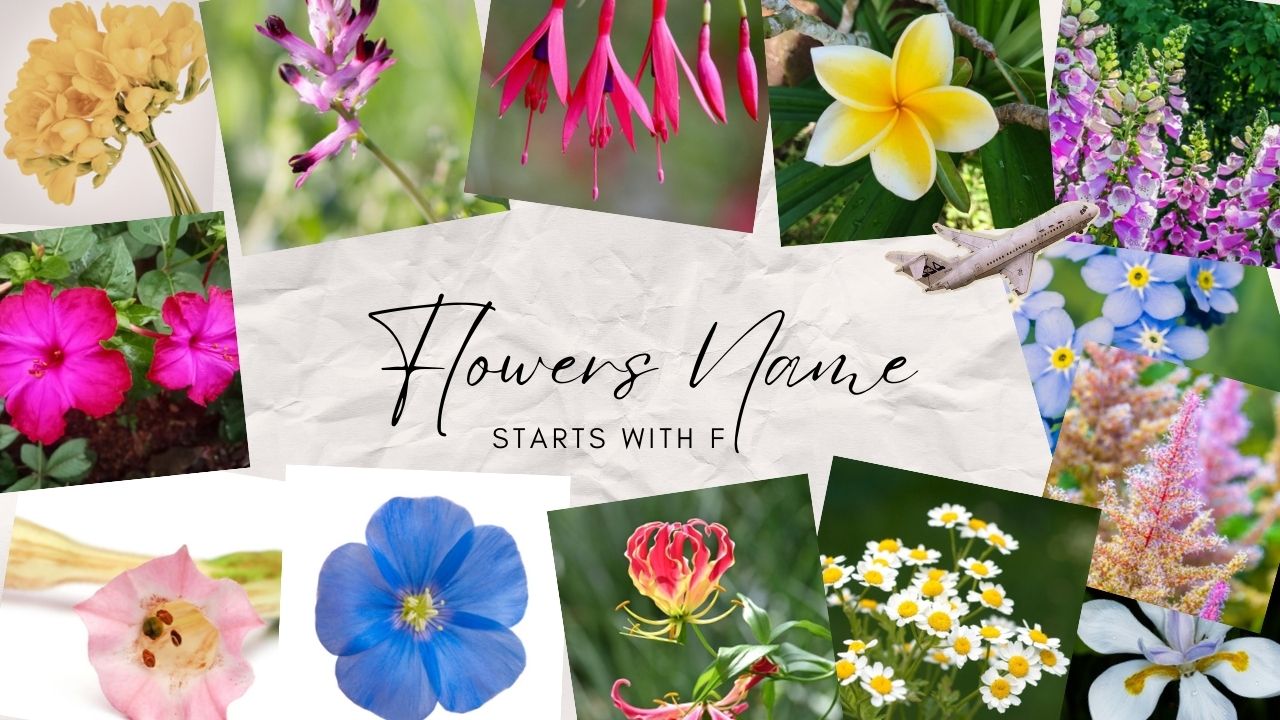
Looking for flowers that start with the letter F? You’ll find a surprisingly rich variety—from soft cottage-garden favorites to bold, architectural blooms and easy-to-grow wildflowers.
Below is a carefully curated list of 20 real “F” flowers, each with helpful growing tips and practical details to guide beginners and experienced gardeners alike.
Explore Flowers That Start With the Letter F
1. Freesia
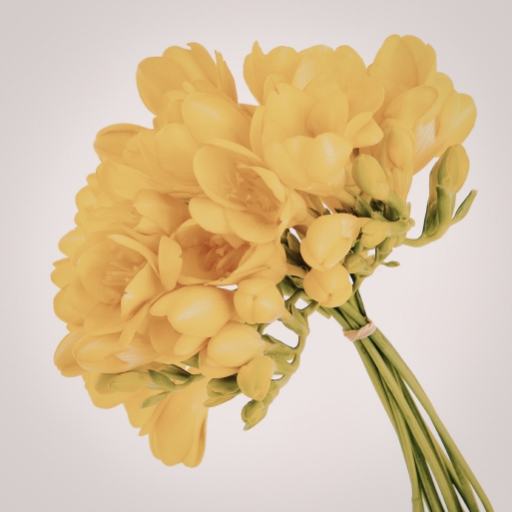
Scientific Name: Freesia spp.
Native Region: South Africa
Blooming Time: Late winter to spring
Flower Colors: Yellow, white, pink, red, purple
Aroma: Strong, sweet fragrance
Interesting Facts:
- Popular in perfumes due to its scent.
- A favorite for cut flower arrangements.
How to Plant / Growing Tips:
- Plant corms in well-drained soil: Prevents rot and promotes root growth.
- Choose full sun: Essential for flowering.
- Water moderately: Keep soil moist during growth.
- Provide support if needed: Taller stems may lean.
2. Foxglove
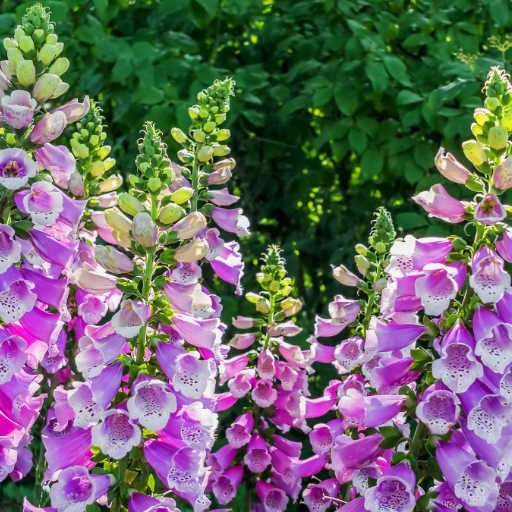
Scientific Name: Digitalis purpurea
Native Region: Europe
Blooming Time: Late spring to summer
Flower Colors: Purple, pink, white, yellow
Aroma: Mild fragrance
Interesting Facts:
- Tall spikes make it a dramatic garden focal point.
- Contains compounds used in heart medications (toxic if ingested).
How to Plant / Growing Tips:
- Plant in partial shade to full sun: Cooler climates tolerate more sun.
- Use well-drained, slightly acidic soil: Helps prevent root rot.
- Water regularly: Keep soil consistently moist but not soggy.
- Allow self-seeding: Foxgloves return naturally year after year.
3. Forget-Me-Not
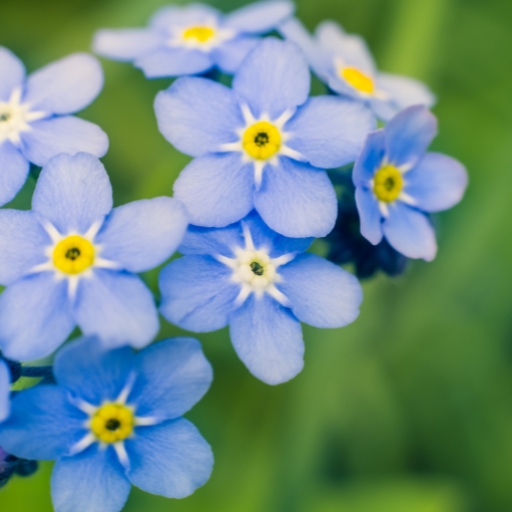
Scientific Name: Myosotis spp.
Native Region: Europe and Asia
Blooming Time: Spring
Flower Colors: Blue, pink, white
Aroma: Very light fragrance
Interesting Facts:
- Symbolizes remembrance and love.
- Spreads easily in garden beds.
How to Plant / Growing Tips:
- Sow seeds directly outdoors: Easy to grow from seed.
- Choose partial shade: Especially in warmer climates.
- Use moist, well-drained soil: Keeps plants healthy.
- Allow self-seeding: Creates natural-looking clusters.
4. Fuchsia
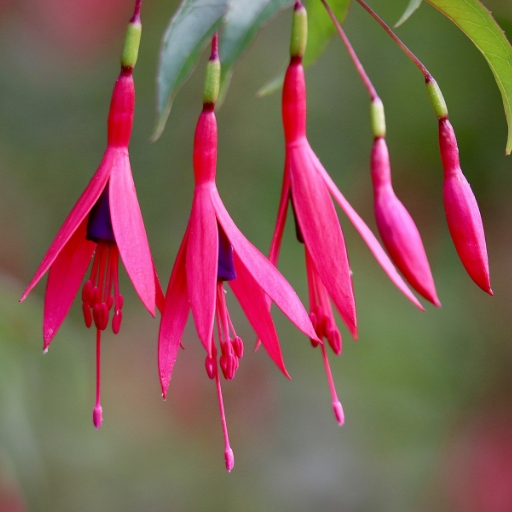
Scientific Name: Fuchsia spp.
Native Region: Central and South America
Blooming Time: Spring to fall
Flower Colors: Pink, purple, red, white
Aroma: Mild or no fragrance
Interesting Facts:
- Known for its drooping, lantern-like flowers.
- Ideal for hanging baskets.
How to Plant / Growing Tips:
- Plant in partial shade: Protect from hot afternoon sun.
- Use rich, well-drained soil: Supports continuous blooming.
- Water regularly: Keep soil consistently moist.
- Pinch back stems: Encourages bushier growth.
5. Flax Flower
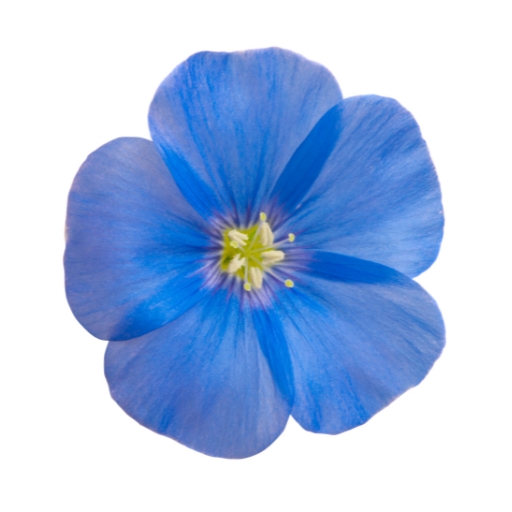
Scientific Name: Linum usitatissimum
Native Region: Middle East
Blooming Time: Spring to summer
Flower Colors: Blue, white
Aroma: Very mild fragrance
Interesting Facts:
- Source of flax seeds and linen fiber.
- Flowers open in the morning and close by afternoon.
How to Plant / Growing Tips:
- Sow seeds directly: Germinates quickly outdoors.
- Plant in full sun: Promotes flowering.
- Use well-drained soil: Prevents root issues.
- Water lightly: Avoid overwatering.
6. Feather Celosia
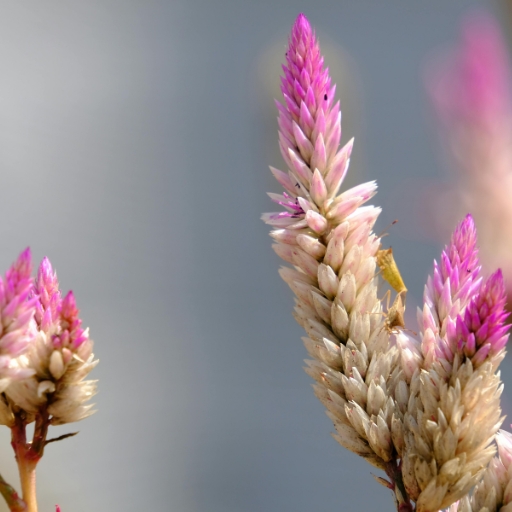
Scientific Name: Celosia argentea
Native Region: Africa and Asia
Blooming Time: Summer to fall
Flower Colors: Red, orange, yellow, pink
Aroma: Very mild fragrance
Interesting Facts:
- Feathery, flame-like blooms.
- Popular in dried flower arrangements.
How to Plant / Growing Tips:
- Plant in full sun: Ensures vibrant color.
- Use well-drained soil: Prevents root issues.
- Water regularly: Keep soil evenly moist.
- Avoid cold temperatures: Sensitive to frost.
7. Four O’Clock Flower
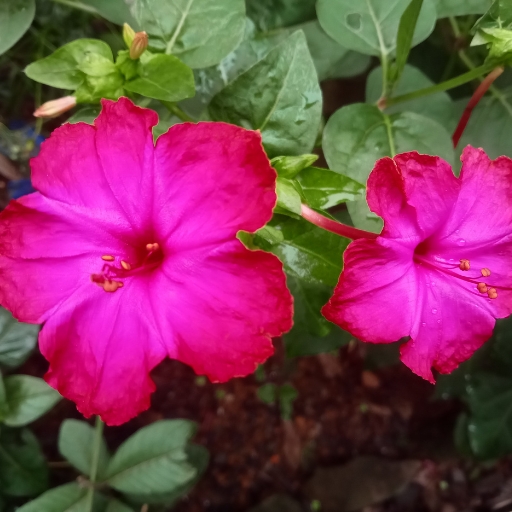
Scientific Name: Mirabilis jalapa
Native Region: South America
Blooming Time: Summer to fall
Flower Colors: Pink, yellow, white, red (often multi-coloured)
Aroma: Sweet fragrance in the evening
Interesting Facts:
- Blooms open in late afternoon.
- Flowers can have multiple colors on one plant.
How to Plant / Growing Tips:
- Plant in full sun: Encourages abundant blooms.
- Use well-drained soil: Prevents root rot.
- Water moderately: Drought-tolerant once established.
- Allow tubers to overwinter: In mild climates for next season.
8. Flame Lily
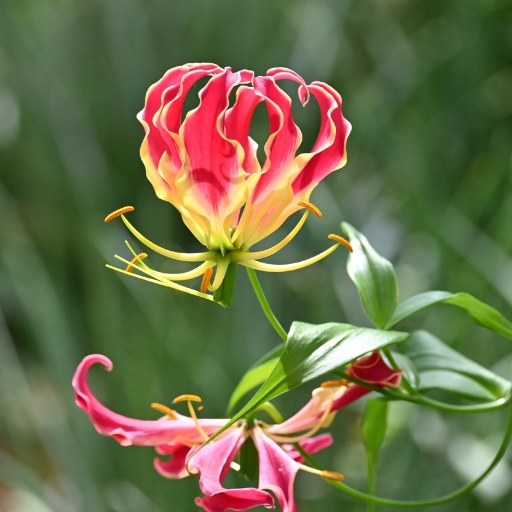
Scientific Name: Gloriosa superba
Native Region: Africa and Asia
Blooming Time: Summer
Flower Colors: Red, yellow
Aroma: Mild fragrance
Interesting Facts:
- Known for its striking flame-like petals.
- Highly toxic if ingested.
How to Plant / Growing Tips:
- Plant in full sun to partial shade: Prefers warm conditions.
- Use well-drained soil: Prevents tuber rot.
- Provide support: Climbing stems need structure.
- Water regularly: Keep soil lightly moist.
9. Fairy Iris
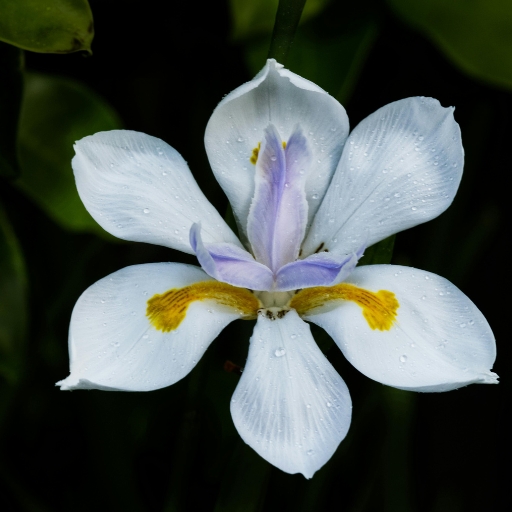
Scientific Name: Dietes grandiflora
Native Region: South Africa
Blooming Time: Spring to summer
Flower Colors: White, yellow, blue
Aroma: Mild fragrance
Interesting Facts:
- Also called “African iris.”
- Low-maintenance and drought-tolerant.
How to Plant / Growing Tips:
- Plant in full sun to partial shade: Adaptable to different light.
- Use well-drained soil: Prevents root issues.
- Water moderately: Once established, needs little care.
- Divide clumps occasionally: Keeps plants healthy.
10. Frangipani (Plumeria)
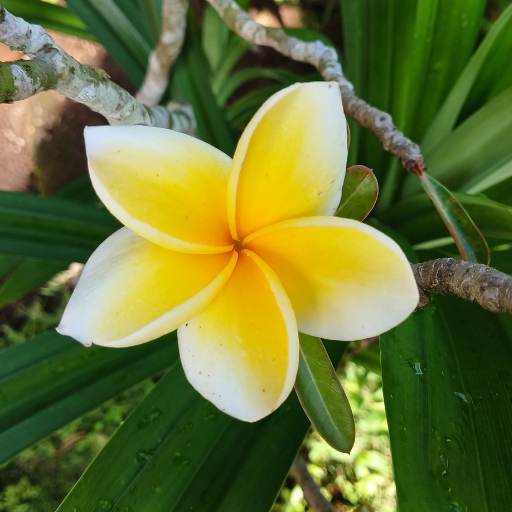
Scientific Name: Plumeria spp.
Native Region: Central America
Blooming Time: Summer to autumn
Flower Colors: White, yellow, pink, red
Aroma: Strong, sweet fragrance
Interesting Facts:
- Widely used in Hawaiian leis.
- Highly fragrant, especially at night.
How to Plant / Growing Tips:
- Plant in full sun: Essential for blooming.
- Use well-drained soil: Prevents root rot.
- Water moderately: Allow soil to dry between watering.
- Protect from frost: Best in warm climates or containers.
11. False Indigo
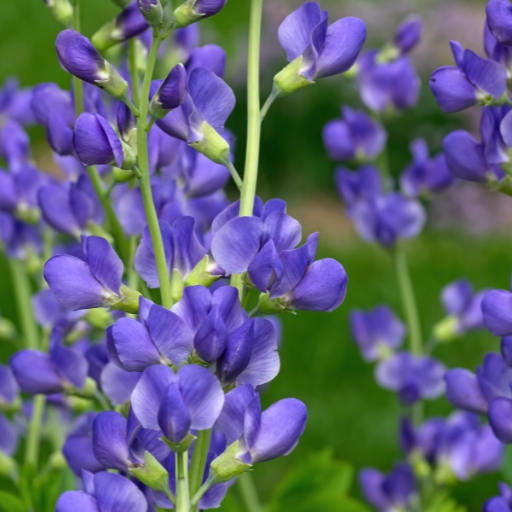
Scientific Name: Baptisia australis
Native Region: North America
Blooming Time: Late spring to summer
Flower Colors: Blue, purple, yellow
Aroma: Mild fragrance
Interesting Facts:
- Native perennial with deep roots.
- Produces decorative seed pods.
How to Plant / Growing Tips:
- Plant in full sun: Encourages flowering.
- Use well-drained soil: Prevents root issues.
- Avoid transplanting: Deep roots don’t like disturbance.
- Water during establishment: Becomes drought-tolerant later.
12. Flowering Tobacco
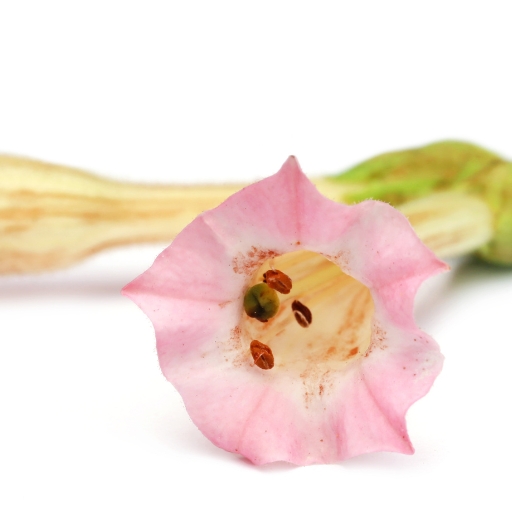
Scientific Name: Nicotiana alata
Native Region: South America
Blooming Time: Summer to fall
Flower Colors: White, pink, green, red
Aroma: Strong, sweet fragrance at night
Interesting Facts
- Flowers release fragrance mainly in the evening.
- Attracts pollinators like moths.
How to Plant / Growing Tips
- Grow in full sun or partial shade.
- Use fertile, well-drained soil.
- Water regularly to keep soil moist.
- Deadhead to prolong blooming.
- Suitable for garden beds and containers.
13. Fern Flower (Astilbe)
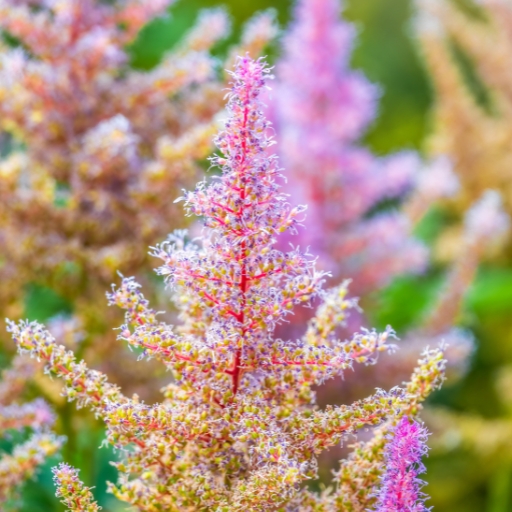
Scientific Name: Astilbe spp.
Native Region: Asia and North America
Blooming Time: Summer
Flower Colors: Pink, white, red, purple
Aroma: Mild fragrance
Interesting Facts
- Known for its feathery, plume-like flowers.
- Grows well in shaded areas.
How to Plant / Growing Tips
- Grow in partial to full shade.
- Use moist, well-drained soil rich in organic matter.
- Water regularly; do not let soil dry out.
- Mulch to retain moisture.
- Ideal for shaded garden areas.
14. Fumitory
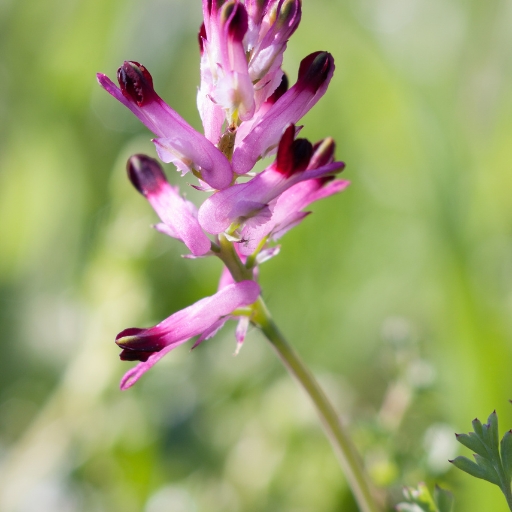
Scientific Name: Fumaria officinalis
Native Region: Europe and Asia
Blooming Time: Spring to summer
Flower Colors: Pink, purple
Aroma: Mild fragrance
Interesting Facts
- Traditionally used in herbal medicine.
- Produces delicate, small flowers.
How to Plant / Growing Tips
- Grow in full sun or light shade.
- Use well-drained soil.
- Water moderately.
- Allow natural spreading.
- Suitable for wildflower gardens.
15. Feverfew
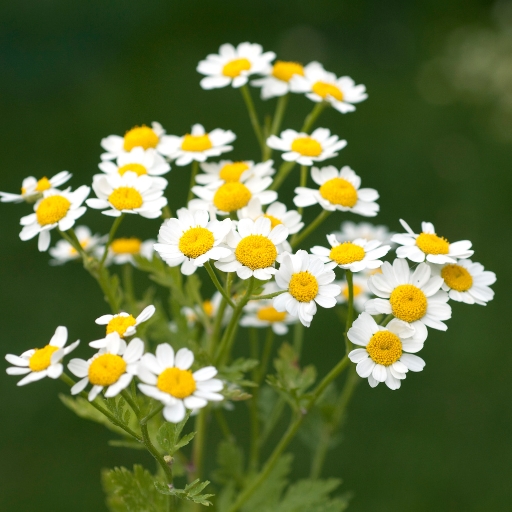
Scientific Name: Tanacetum parthenium
Native Region: Europe
Blooming Time: Summer
Flower Colors: White, yellow
Aroma: Strong herbal scent
Interesting Facts:
- Traditionally used in herbal medicine.
- Resembles small daisies.
How to Plant / Growing Tips:
- Plant in full sun: Ensures compact growth.
- Use well-drained soil: Prevents root problems.
- Water moderately: Avoid soggy soil.
- Deadhead blooms: Encourages continuous flowering.
16. Fireweed
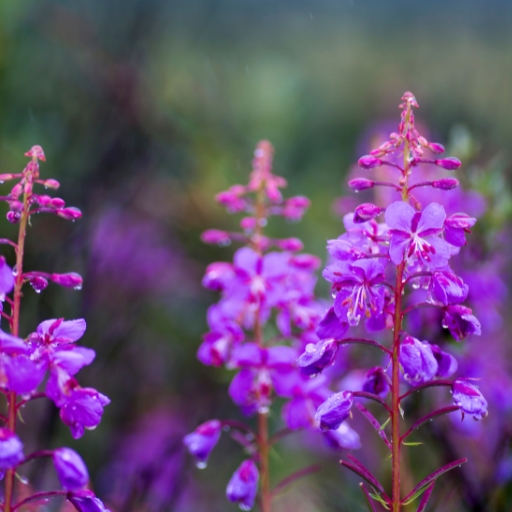
Scientific Name: Chamerion angustifolium
Native Region: Northern Hemisphere
Blooming Time: Summer
Flower Colors: Pink, purple
Aroma: Light
Interesting Facts:
- Often the first plant to grow after wildfires.
- Produces edible shoots and leaves.
How to Plant / Growing Tips:
- Plant in full sun: Encourages strong growth.
- Use well-drained soil: Adaptable but prefers light soil.
- Water during establishment: Becomes hardy later.
- Allow spreading: Ideal for naturalized areas.
17. Floribunda Rose
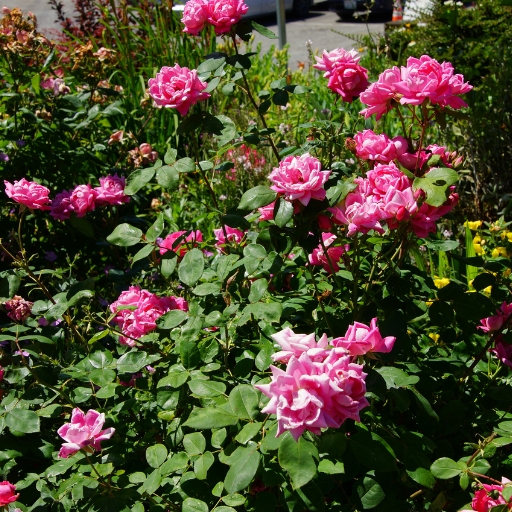
Scientific Name: Rosa spp.
Native Region: Cultivated hybrid
Blooming Time: Late spring to fall
Flower Colors: Various (red, pink, yellow, white)
Aroma: Mild to strong (variety-dependent)
Interesting Facts:
- Known for clusters of blooms.
- Continuous flowering throughout the season.
How to Plant / Growing Tips:
- Plant in full sun: Essential for flowering.
- Use rich, well-drained soil: Roses need nutrients.
- Water deeply: Especially during dry periods.
- Prune annually: Encourages new growth and blooms.
18. Fennel Flower (Nigella)
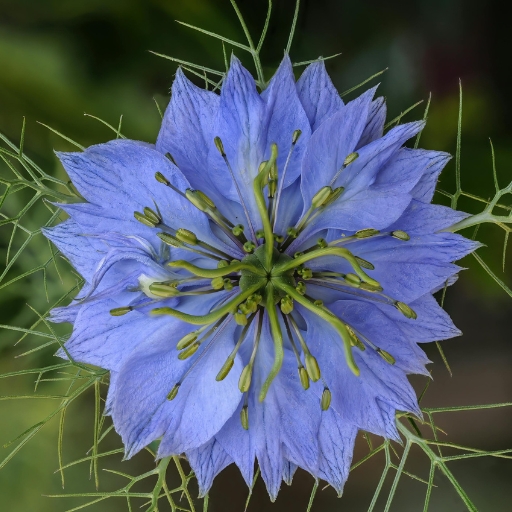
Scientific Name: Nigella damascena
Native Region: Europe, Asia
Blooming Time: Summer
Flower Colors: Blue, white
Aroma: Light
Interesting Facts:
- Also called “Love-in-a-Mist.”
- Produces decorative seed pods.
How to Plant / Growing Tips:
- Sow seeds directly: Does not transplant well.
- Choose full sun: Encourages blooming.
- Use well-drained soil: Prevents root issues.
- Allow self-seeding: Naturalizes easily.
19. Fritillaria
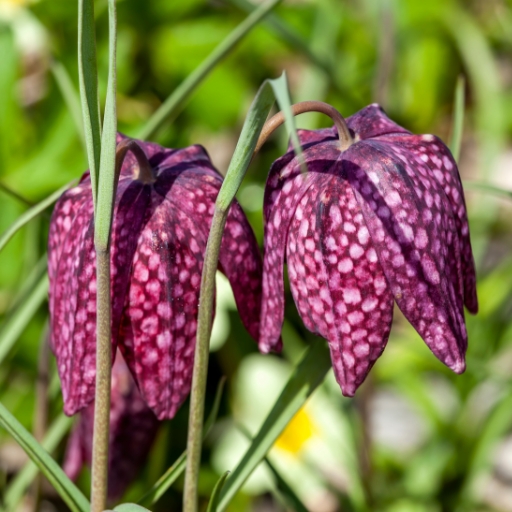
Scientific Name: Fritillaria spp.
Native Region: Europe, Asia
Blooming Time: Spring
Flower Colors: Purple, yellow, orange
Aroma: Mild to musky
Interesting Facts:
- Known for checkered petal patterns.
- Some varieties deter pests.
How to Plant / Growing Tips:
- Plant bulbs in fall: Prepares for spring blooms.
- Use well-drained soil: Prevents bulb rot.
- Choose full sun: Encourages flowering.
- Avoid excessive moisture: Especially in winter.
20. Fountain Grass Flower
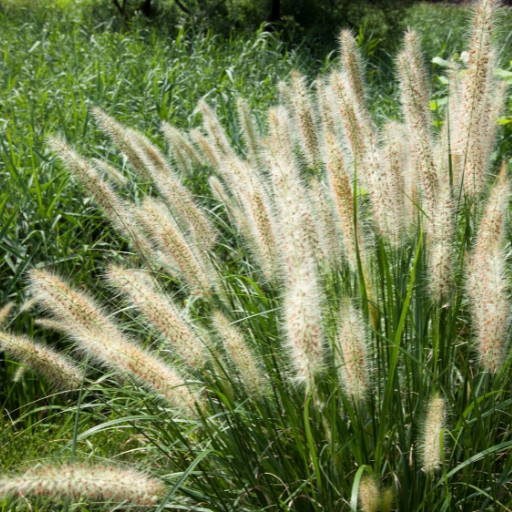
Scientific Name: Pennisetum spp.
Native Region: Africa, Asia
Blooming Time: Summer to fall
Flower Colors: Pink, purple, tan
Aroma: None
Interesting Facts:
- Ornamental grass with soft, plume-like flowers.
- Adds texture to landscapes.
How to Plant / Growing Tips:
- Plant in full sun: Promotes strong growth.
- Use well-drained soil: Prevents root issues.
- Water moderately: Drought-tolerant once established.
- Trim in late winter: Encourages fresh growth.
Final Thoughts
Looking for flowers that start with the letter F? You’ll find a surprisingly rich variety—from soft cottage-garden favorites to bold, architectural blooms and easy-to-grow wildflowers.
Below is a carefully curated list of 20 real “F” flowers, each with helpful growing tips and practical details to guide beginners and experienced gardeners alike.