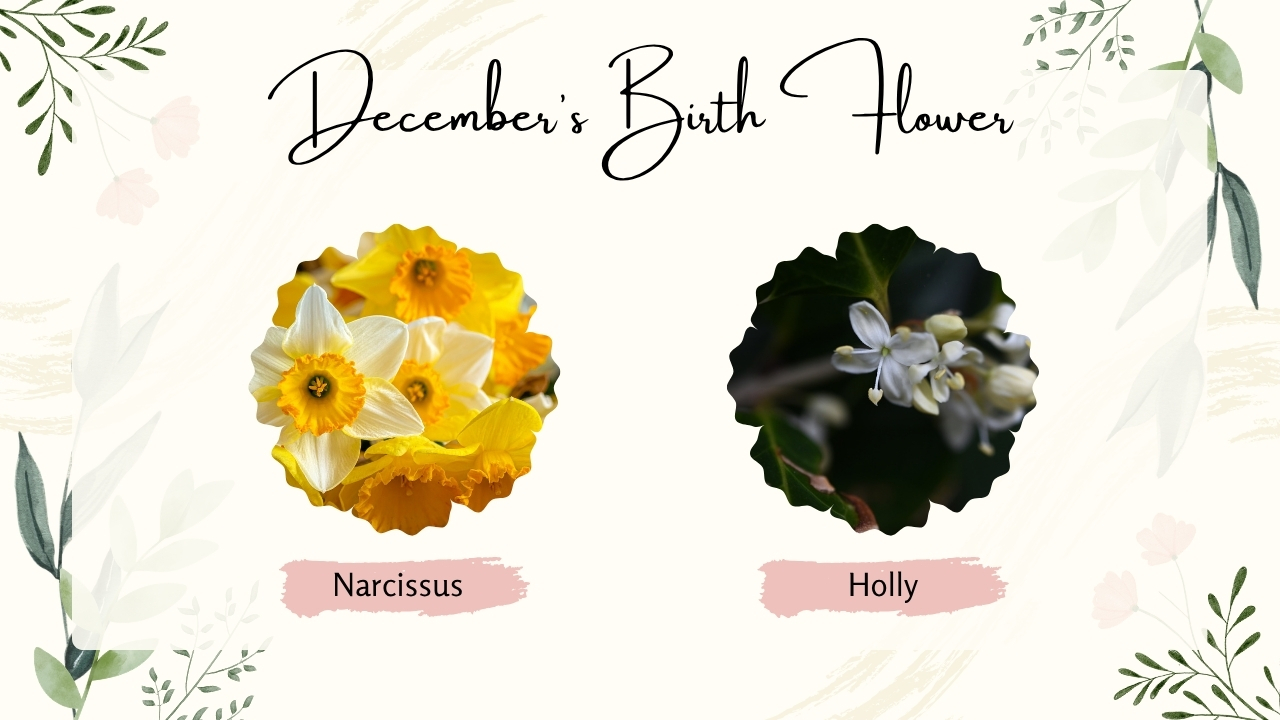
December babies, you’ve hit the floral jackpot. While your friends born in warmer months get Honeysuckle and roses, you get something that speaks to winter’s quiet magic. Yes, December claims two birth flowers: Narcissus and Holly. One smells like heaven and announces spring’s eventual arrival even in the dead of winter. The other is prickly, festive, and basically owns Christmas. Let me walk you through why these two plants became December’s representatives and what they actually mean if you’re lucky enough to call this month your own.
The Narcissus: December’s Fragrant Herald
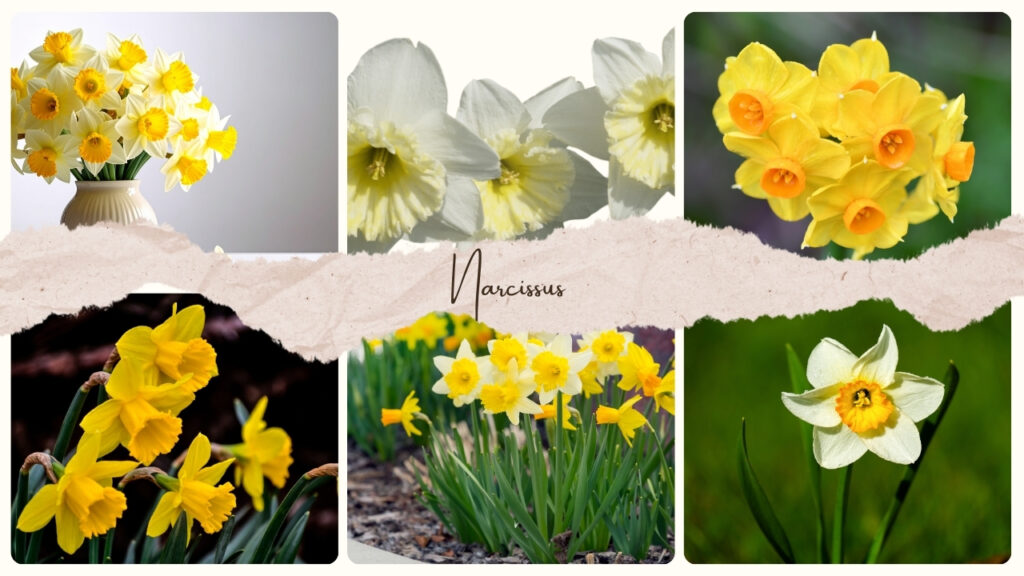
When most people hear “narcissus,” they immediately think of daffodils, and they’re not wrong. The narcissus family is huge, encompassing everything from those cheerful yellow daffodils that pop up in March to the delicate paperwhites that bloom indoors during winter. For December’s purposes, we’re talking primarily about the paperwhite narcissus and similar winter-blooming varieties.
Here’s what makes narcissus special: it blooms when basically nothing else does. In the Northern Hemisphere, December means short days, cold nights, and landscapes that look like someone drained all the color out. Then here comes narcissus, producing clusters of white or pale yellow flowers that smell absolutely incredible. That fragrance is distinctive—sweet, heady, almost intoxicating. Some people find it overwhelming in enclosed spaces, but most agree it’s one of winter’s greatest pleasures.
The symbolism attached to narcissus centers on rebirth, renewal, and hope. It’s not hard to see why. When you force paperwhites to bloom indoors during December, you’re essentially creating a little pocket of spring in your living room. Ancient cultures recognized this quality too. The Greeks associated narcissus with the afterlife and new beginnings. Victorians, who assigned meanings to every flower under the sun, decided narcissus represented respect and faithfulness.
If you’re shopping for someone with a December birthday, narcissus makes a thoughtful choice. You can buy potted paperwhites that’ll bloom within weeks, or cut narcissus stems from a florist during the holiday season. They last reasonably well in a vase—usually about a week if you change the water regularly.
Holly: The Prickly Side of December
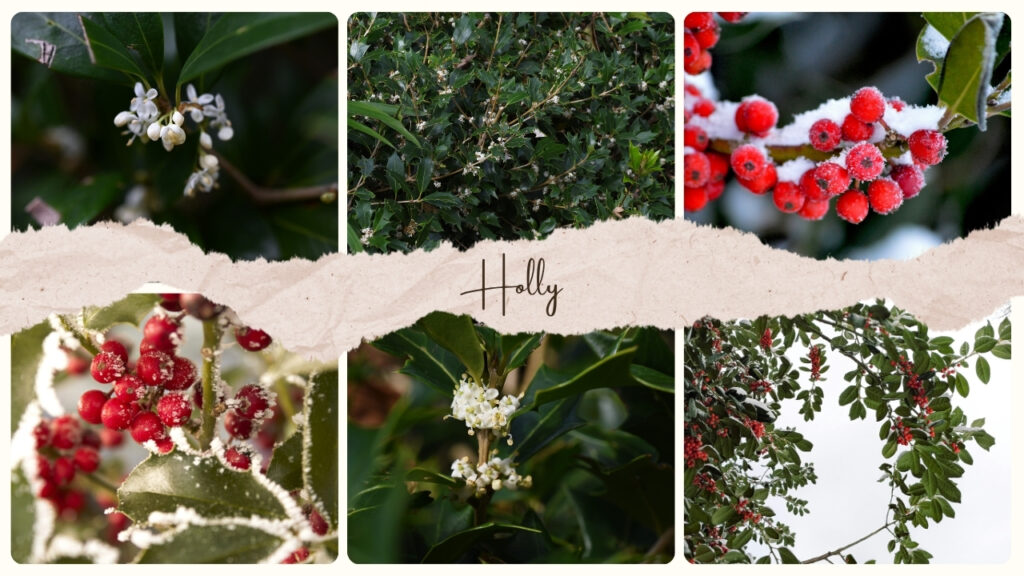
Now let’s talk about holly, December’s other birth flower. This is where things get interesting because holly isn’t really the warm, fuzzy choice. It’s covered in sharp spines, produces toxic berries, and looks like it means business. Yet it’s become inextricably linked with December celebrations, particularly Christmas, to the point where you can’t imagine the holiday without those glossy green leaves and bright red berries.
Holly’s connection to December goes back much further than Christianity. Ancient Druids believed holly stayed green through winter because it provided shelter to woodland spirits escaping the cold. Romans gave holly wreaths as gifts during Saturnalia, their winter solstice festival. When Christmas traditions developed, holly seamlessly transitioned into Christian symbolism—the prickly leaves representing Christ’s crown of thorns, the red berries his blood.
Beyond the religious associations, holly represents protection, domestic happiness, and foresight. Those meanings probably stem from its practical uses. Holly makes excellent hedging material because those spines genuinely keep things out. Bringing holly indoors during winter was thought to protect the household from evil spirits and bad weather. The fact that it’s an evergreen also meant it symbolized eternal life and the promise that spring would return.
For December birthdays, holly works beautifully in arrangements, wreaths, and winter bouquets. Just handle it carefully—those spines aren’t decorative. They’ll poke right through gloves if you’re not paying attention.
Why December Gets Two Flowers
Most months have a primary and secondary birth flower, but December’s pairing feels especially thoughtful. You’ve got narcissus representing hope and new beginnings, and holly representing protection and resilience. Together, they paint a complete picture of what December actually feels like.
This is the month when the year ends and a new one begins. It’s dark and cold, yet full of celebration and light. We gather indoors with people we love, protect what matters to us, and look forward to brighter days ahead. Narcissus and holly capture all of that—the forward-looking optimism and the fierce determination to weather whatever comes.
Gifting December Birth Flowers
If you’re buying flowers for a December birthday, you’ve got options. Narcissus arrangements are readily available from November through January, especially paperwhites. They’re relatively inexpensive and make wonderful gifts because they continue blooming for weeks. You can even buy narcissus bulbs and pot them yourself for a more personal touch.
Holly works well in mixed arrangements. Florists often combine it with white roses, pine branches, and red carnations for a winter birthday bouquet that feels festive without being specifically Christmas-themed. If your December birthday person celebrates during the holidays, lean into it—holly and narcissus together make a gorgeous combination.
For a creative approach, consider giving a living holly plant. Many varieties adapt well to containers, and they’re surprisingly low-maintenance once established. Your recipient gets a long-lasting gift that’ll come back year after year, producing those iconic berries every December.
The Personality of December’s Birth Flowers
Here’s where we get a bit whimsical. If you believe birth flowers say something about the people born in their month, December babies are apparently both hopeful and tough. They’re the ones who see possibilities even in difficult situations (narcissus) but also know how to set boundaries and protect themselves when necessary (holly).
That tracks, honestly. December babies grow up having birthdays swallowed by holiday chaos. They learn early to hold their own, insist on separate birthday celebrations, and not let their special day disappear into the Christmas frenzy. That’s very holly energy. But they’re also born in a month that celebrates light, hope, and renewal despite the darkness outside. That’s pure narcissus.
Growing Your Birth Flowers at Home
Want to cultivate your own December birth flowers? Narcissus is absurdly easy. Buy paperwhite bulbs in fall, stick them in a shallow dish with stones and water, and they’ll bloom in three to four weeks. No soil needed. Place them in a cool spot with bright, indirect light, and don’t overwater. That’s it. You’ll have fragrant blooms through December and into January.
Holly requires more commitment. You’ll need space in your yard or a large container, and you should know that most holly plants are dioecious—meaning you need both male and female plants if you want berries. The female does the fruiting, but she needs a male nearby for pollination. Holly prefers slightly acidic soil and can handle shade, which makes it useful for tricky spots in your garden.
American holly (Ilex opaca) and English holly (Ilex aquifolium) are the most popular varieties, though English holly can become invasive in some areas. Check with your local extension office before planting. Once established, holly is incredibly hardy and will outlive you by decades.
December’s birth flowers prove that winter has its own distinct beauty. You don’t need tropical blooms or cottage garden favorites when you’ve got narcissus filling your home with fragrance and holly standing guard outside. They’re tough, meaningful, and perfectly suited to the birthday month they represent.