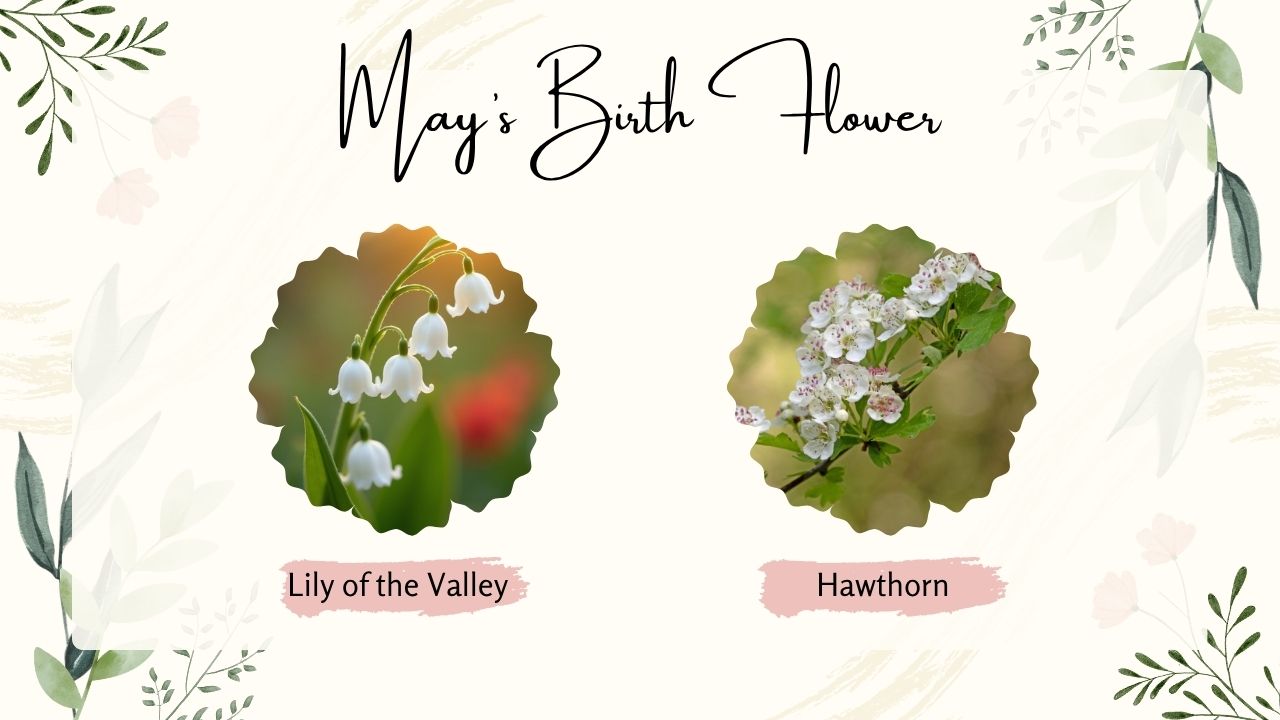
You might be surprised to learn that May month is represented by not just one, but two meaningful birth flowers: the Lily of the Valley and the Hawthorn.
Each carries its own symbolism, history, and charm. The Lily of the Valley is delicate and fragrant, often associated with happiness and renewal, while the Hawthorn represents hope, protection, and the beauty of life’s transitions.
But these flowers are more than just pretty symbols on paper. They tell stories—about seasons changing, traditions evolving, and how people across cultures have used flowers to express emotions long before words could.
Let’s explore what makes May’s birth flowers so special—and why they still matter today.
Why May Has Two Birth Flowers
Unlike some months that are tied to a single bloom, May has a dual identity. This isn’t random—it’s rooted in both botanical availability and cultural traditions.
May sits at the heart of spring in much of the Northern Hemisphere. It’s a time when nature is in full bloom, and different flowers reach their peak at slightly different times. Because of this, multiple flowers became associated with the month over time.
The Lily of the Valley gained popularity through European traditions, especially in France, where it’s gifted on May 1st as a symbol of good luck and happiness. Meanwhile, the Hawthorn, a flowering shrub or small tree, has deep roots in ancient folklore, particularly in Celtic and British traditions tied to seasonal festivals like Beltane.
Instead of choosing one over the other, both flowers became symbolic of May—each representing a different side of the season.
Lily of the Valley: The Gentle Symbol of Joy
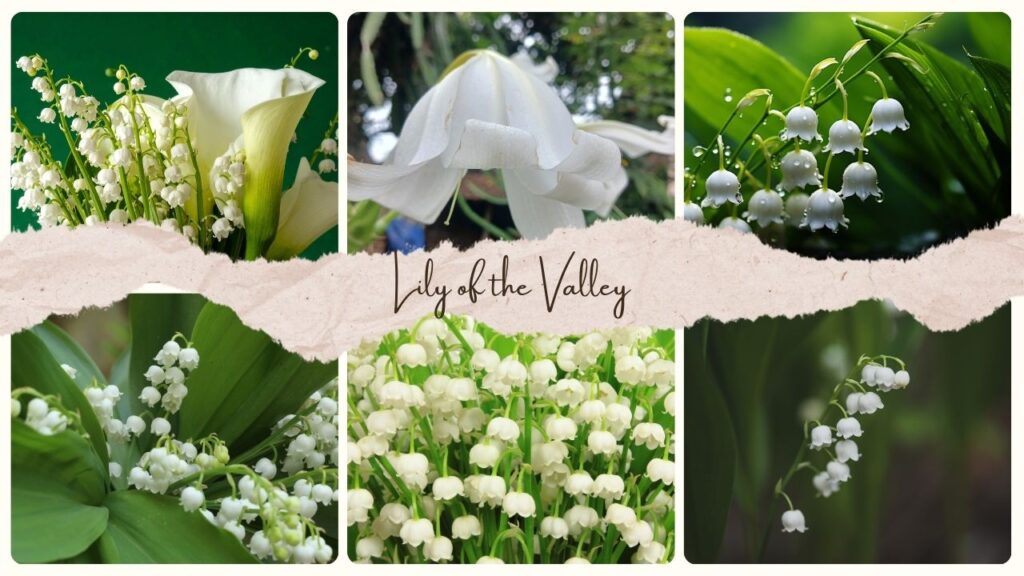
There’s something almost magical about the Lily of the Valley. Its tiny, bell-shaped white flowers hang delicately from slender stems, and its fragrance is soft but unforgettable.
What It Represents
The Lily of the Valley is most commonly associated with:
- Happiness returning
- Sweetness and humility
- Renewal and fresh beginnings
- Purity and innocence
It’s the kind of flower that quietly speaks volumes. Rather than bold colors or dramatic shapes, it relies on subtle beauty—making it a powerful symbol of understated joy.
A Flower With Royal and Cultural Significance
This flower has a long-standing place in history and celebrations. In France, the tradition of giving Lily of the Valley on May Day dates back to the Renaissance. Even today, people exchange small bouquets as a gesture of good fortune.
It has also appeared in royal weddings. You might recognize it from bridal bouquets, where it symbolizes purity and a happy marriage.
Why It Fits May So Perfectly
May is a month of emotional renewal. The chill of winter is gone, and the world feels lighter. The Lily of the Valley mirrors this shift—it blooms quietly but confidently, signaling that brighter days are here to stay.
Hawthorn: The Wild Beauty of Hope and Protection
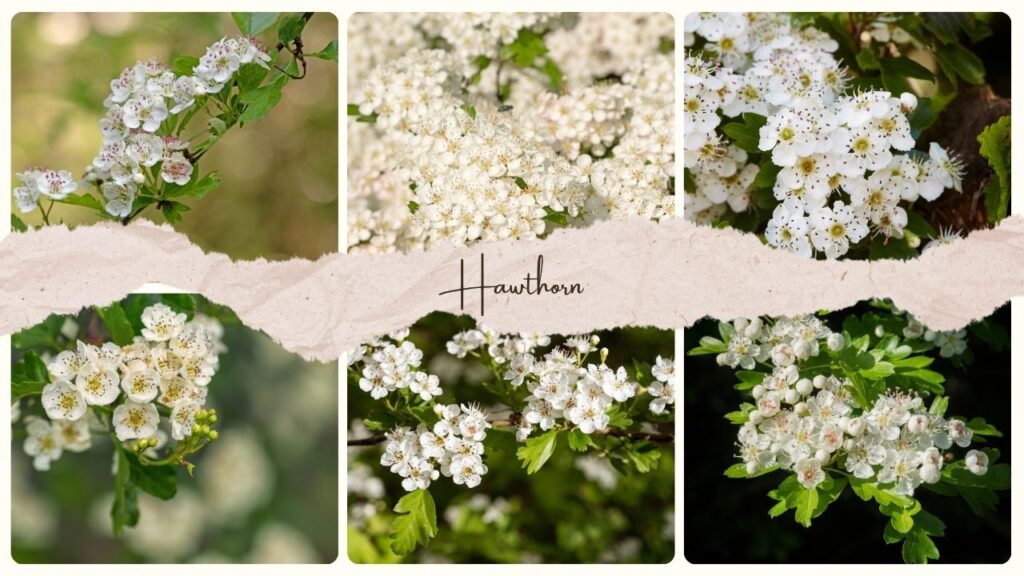
If the Lily of the Valley represents softness, the Hawthorn brings a more rugged, natural energy.
Unlike delicate garden flowers, Hawthorn grows as a shrub or small tree, often forming dense hedges covered in clusters of white or pink blossoms.
Symbolism and Meaning
The Hawthorn carries deeper, sometimes more complex meanings:
- Hope and optimism
- Protection and safety
- Fertility and love
- Balance between life and change
In ancient folklore, Hawthorn trees were believed to have protective powers. They were often planted near homes or sacred spaces to ward off negative energy.
A Flower Rooted in Tradition
The Hawthorn is closely tied to Beltane, an ancient Celtic festival marking the beginning of summer. Celebrated around May 1st, Beltane honored fertility, growth, and the abundance of nature.
Hawthorn blossoms were used in rituals and decorations, symbolizing the transition from spring into the warmth of summer.
Why It Complements the Lily of the Valley
While the Lily of the Valley focuses on personal joy and emotional renewal, the Hawthorn represents the broader cycle of life—growth, protection, and transformation.
Together, they capture both the inner and outer experiences of spring.
How These Flowers Reflect May Personalities
Birth flowers are often used to describe personality traits, and May’s flowers offer an interesting mix.
People born in May are often seen as:
- Warm and optimistic (Hawthorn influence)
- Gentle yet resilient (Lily of the Valley influence)
- Emotionally intuitive
- Naturally uplifting to others
There’s a balance here. On one hand, there’s softness and kindness. On the other, there’s strength and adaptability.
It’s this combination that makes May-born individuals stand out—they can be both calming and energizing at the same time.
Using May’s Birth Flowers in Everyday Life
You don’t have to be a gardener or florist to appreciate these blooms. There are simple, creative ways to bring their symbolism into your life.
Meaningful Gifts
If you’re celebrating someone’s birthday in May, incorporating these flowers can add a thoughtful touch.
- A small bouquet of Lily of the Valley symbolizes happiness and appreciation
- A Hawthorn-themed gift (like a print or dried arrangement) represents protection and hope
Even if the exact flowers aren’t available, choosing something inspired by their meanings can make your gift more personal.
Home and Garden Inspiration
If you enjoy gardening, these flowers can influence your choices.
- Lily of the Valley thrives in shaded areas and creates a soft, woodland feel
- Hawthorn can be used as a natural hedge, offering both beauty and privacy
Together, they can transform a space into something that feels both peaceful and alive.
Symbolic Decor
You might also see these flowers used in:
- Wedding themes
- Seasonal decor
- Jewelry designs
Their meanings translate beautifully into visual storytelling.
Final Thoughts
May’s birth flowers—the Lily of the Valley and the Hawthorn—offer a beautiful contrast. One is delicate and intimate, the other bold and rooted in tradition. Yet together, they tell a complete story of spring at its peak.
But as you’ve seen, there’s much more beneath the surface. These flowers represent joy, hope, renewal, and the quiet strength that comes with growth.
And maybe that’s the real beauty of birth flowers—they remind us that even something as small as a bloom can carry meaning far beyond what we see.