Looking for flowers that start with the letter A? There are quite a few beautiful and garden-friendly options—ranging from delicate spring bloomers to bold tropical showstoppers.
Below, you’ll find 20 real flowers that begin with “A,” each with practical growing tips and interesting facts to help you choose the right one for your garden or home décor.
List of Flowers That Start With the Letter A
1. Aster
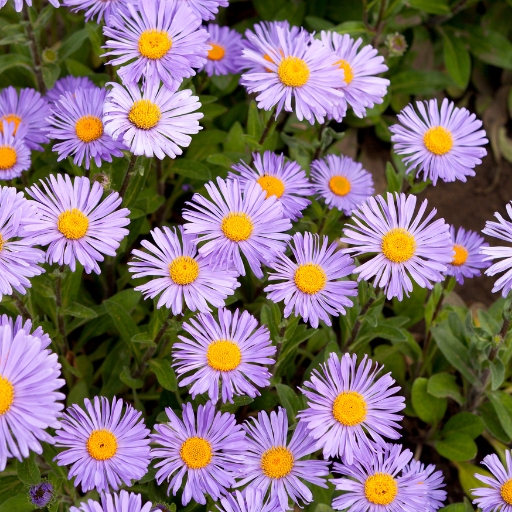
Scientific Name: Aster spp.
Native Region: Europe, Asia, and North America
Blooming Time: Late summer to fall
Flower Colors: Purple, pink, blue, white
Aroma: Mild, slightly sweet fragrance
Interesting Facts
- Asters symbolize love, wisdom, and patience.
- Their star-shaped flowers attract bees and butterflies.
How to Plant / Growing Tips:
- Choose a sunny location: Asters thrive in full sun, which helps them produce more blooms and stay compact rather than leggy.
- Use well-draining soil: They don’t like soggy roots, so mix compost into your soil if drainage is poor.
- Water consistently: Keep soil evenly moist, especially during dry periods, but avoid overwatering.
- Divide every 2–3 years: This keeps plants vigorous and prevents overcrowding, which can lead to disease.
2. Azalea
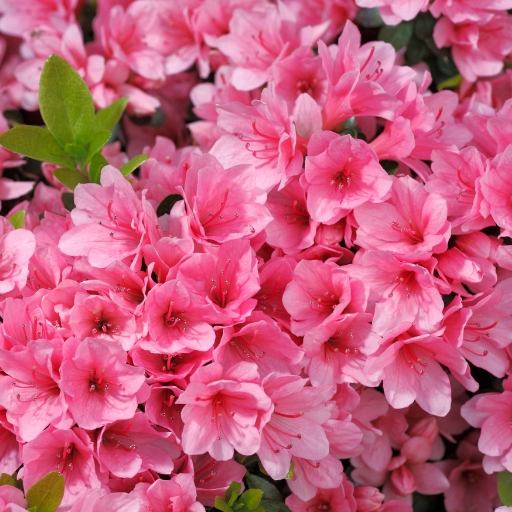
Scientific Name: Rhododendron spp.
Native Region: Asia, North America, and Europe
Blooming Time: Spring
Flower Colors: Pink, red, white, purple, orange
Aroma: Light floral scent (varies by variety)
Interesting Facts
- Azaleas are widely used in landscape gardens and parks.
- They are closely related to rhododendrons.
How to Plant / Growing Tips:
- Plant in acidic soil: Azaleas require a pH between 4.5 and 6.0, so use soil mixes designed for acid-loving plants.
- Provide partial shade: Morning sun with afternoon shade prevents leaf burn.
- Mulch generously: A layer of pine bark or needles helps retain moisture and maintain acidity.
- Water deeply but infrequently: Keep soil moist but never waterlogged to avoid root rot.
3. Amaryllis
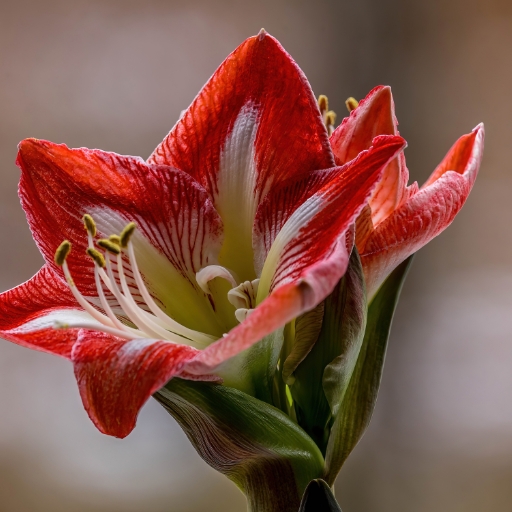
Scientific Name: Hippeastrum spp.
Native Region: South America
Blooming Time: Winter to early spring
Flower Colors: Red, white, pink, orange
Aroma: Light fragrance or sometimes scentless
Interesting Facts
- Amaryllis is a popular indoor flowering bulb plant.
- One bulb can produce multiple large trumpet-shaped flowers.
How to Plant / Growing Tips:
- Use a snug pot: Amaryllis bulbs prefer tight containers to encourage blooming.
- Plant with the top exposed: Leave the upper third of the bulb above soil level.
- Water lightly at first: Too much moisture before growth starts can cause rot.
- Place in bright light: Once growth appears, sunlight supports strong stems and blooms.
4. Anemone
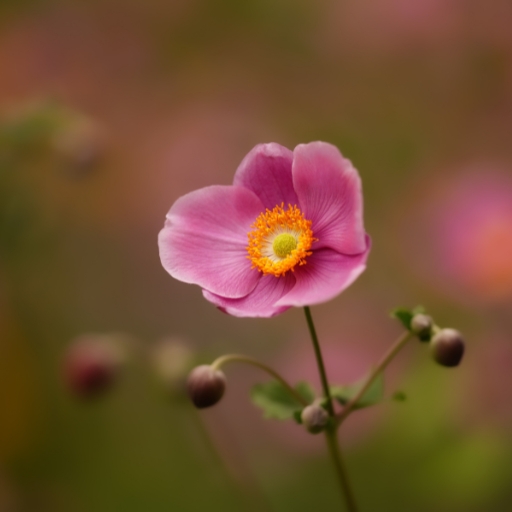
Scientific Name: Anemone spp.
Native Region: Europe, Asia, and North America
Blooming Time: Spring or fall (depending on species)
Flower Colors: Red, purple, pink, blue, white
Aroma: Very mild fragrance
Interesting Facts
- Anemones are often called “windflowers.”
- They are popular in bouquets and floral arrangements.
How to Plant / Growing Tips:
- Soak bulbs before planting: This helps kickstart germination.
- Plant in loose, well-drained soil: Prevents rot and encourages root growth.
- Provide partial sun: Especially in warmer climates to prevent stress.
- Water moderately: Keep soil moist but not soggy.
5. Angelonia
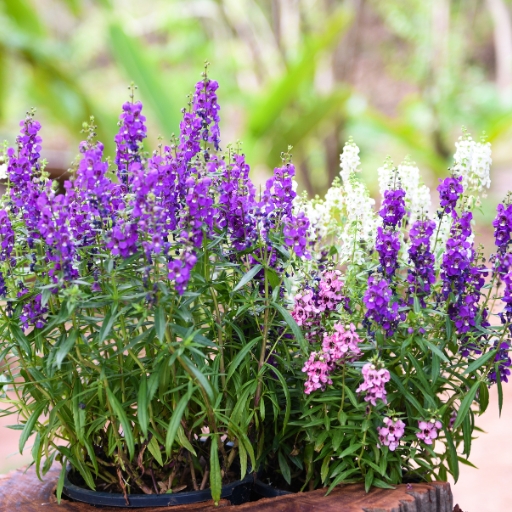
Scientific Name: Angelonia angustifolia
Native Region: Mexico and the Caribbean
Blooming Time: Summer to fall
Flower Colors: Purple, pink, white, blue
Aroma: Light grape-like fragrance
Interesting Facts
- Angelonia is sometimes called the “summer snapdragon.”
- It tolerates heat and drought very well.
How to Plant / Growing Tips:
- Plant in full sun: This plant thrives in heat and bright light.
- Use well-drained soil: Prevents root rot in humid climates.
- Water moderately: Once established, it tolerates some drought.
- Fertilize lightly: Too much fertilizer can reduce blooming.
6. Allium
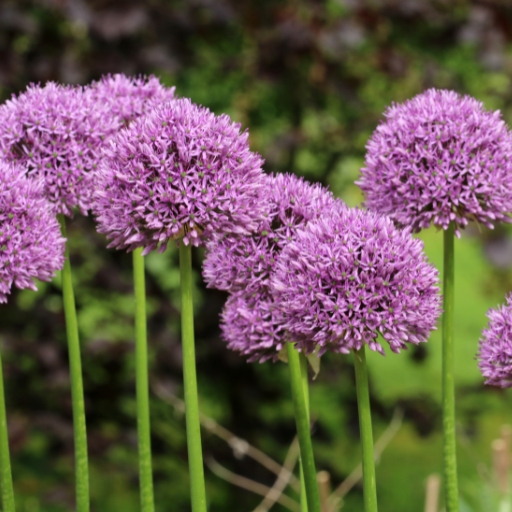
Scientific Name: Allium spp.
Native Region: Northern Hemisphere
Blooming Time: Late spring to early summer
Flower Colors: Purple, white, pink, yellow
Aroma: Onion-like scent when crushed
Interesting Facts
- Allium belongs to the same family as onions and garlic.
- Their globe-shaped flowers create striking garden displays.
How to Plant / Growing Tips:
- Plant bulbs in fall: This gives roots time to establish before spring growth begins.
- Choose full sun: At least 6 hours of sunlight ensures strong stems and large blooms.
- Space bulbs properly: Crowding can reduce airflow and increase disease risk.
- Let foliage die back naturally: Leaves feed the bulb for next year’s blooms.
7. Alyssum (Sweet Alyssum)
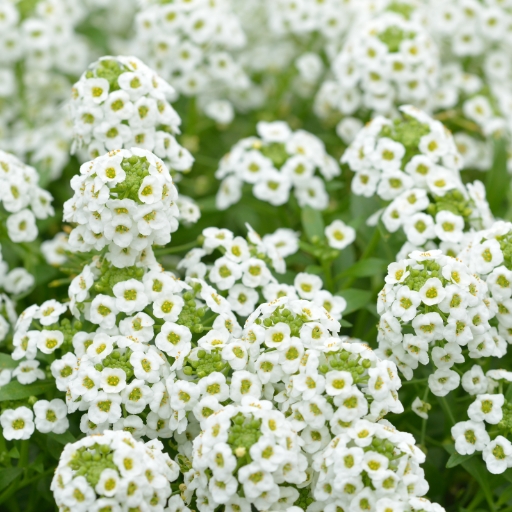
Scientific Name: Lobularia maritima
Native Region: Mediterranean region
Blooming Time: Spring to early summer
Flower Colors: White, pink, purple
Aroma: Sweet honey-like fragrance
Interesting Facts
- Sweet alyssum is often used as a border plant in gardens.
- The flowers attract beneficial insects.
How to Plant / Growing Tips:
- Sow seeds directly: Scatter seeds on the soil surface and press lightly.
- Choose full sun to partial shade: More sun equals more blooms.
- Keep soil lightly moist: Essential for seed germination and early growth.
- Trim after flowering: Encourages a fresh flush of blooms.
8. Armeria (Sea Thrift)
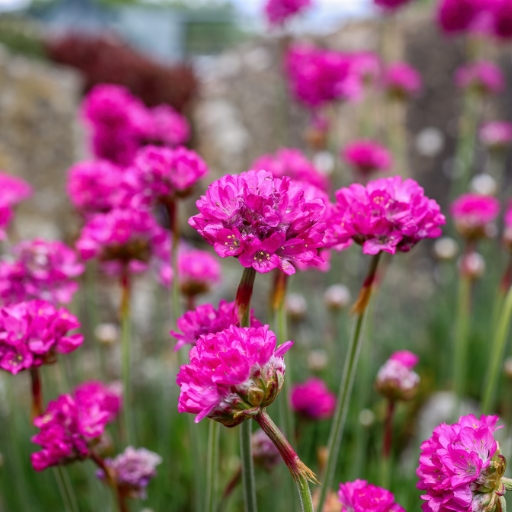
Scientific Name: Armeria maritima
Native Region: Coastal regions of Europe and North America
Blooming Time: Spring to early summer
Flower Colors: Pink, purple, white
Aroma: Very mild fragrance
Interesting Facts
- Armeria grows naturally in coastal and rocky environments.
- Its compact growth makes it ideal for rock gardens.
How to Plant / Growing Tips:
- Choose sandy or gritty soil: Mimics its natural coastal habitat.
- Plant in full sun: Encourages compact growth and flowering.
- Avoid overwatering: This plant prefers drier conditions.
- Trim spent blooms: Helps maintain a tidy appearance.
9. Aquilegia (Columbine)
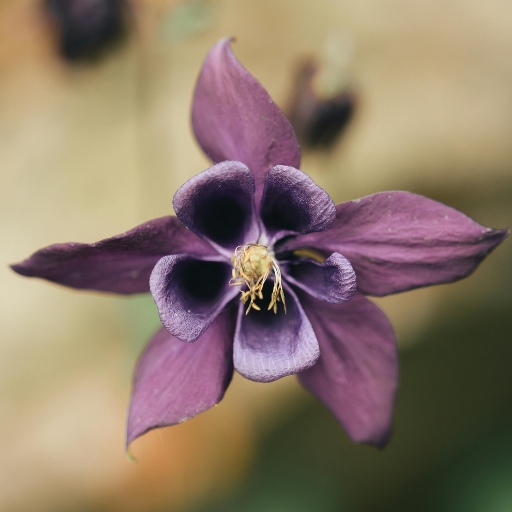
Scientific Name: Aquilegia spp.
Native Region: Northern Hemisphere
Blooming Time: Spring to early summer
Flower Colors: Blue, purple, pink, yellow, white
Aroma: Mild fragrance
Interesting Facts
- Columbine flowers have distinctive spurred petals.
- They are highly attractive to hummingbirds and pollinators.
How to Plant / Growing Tips:
- Grow in partial shade: Especially in warmer U.S. regions.
- Use well-drained soil: Prevents crown rot.
- Allow self-seeding: Columbine spreads naturally with minimal effort.
- Water regularly: Keep soil evenly moist during growth.
10. Abutilon (Flowering Maple)
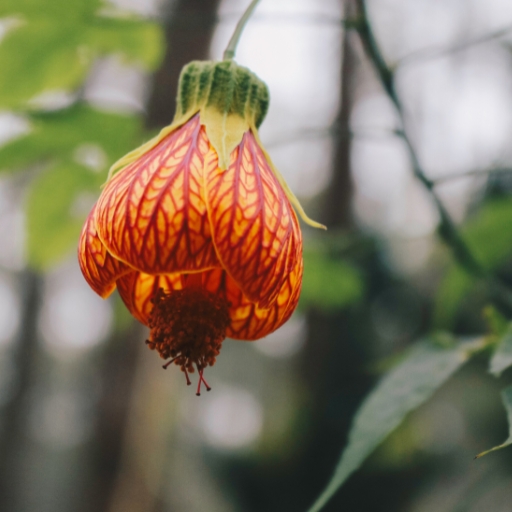
Scientific Name: Abutilon spp.
Native Region: Tropical and subtropical regions
Blooming Time: Spring through fall
Flower Colors: Red, orange, yellow, pink
Aroma: Generally fragrance-free
Interesting Facts
- The leaves resemble maple leaves, giving the plant its common name.
- It produces lantern-shaped flowers.
How to Plant / Growing Tips:
- Grow in bright indirect light: Too much direct sun can scorch leaves indoors.
- Use well-draining potting mix: Prevents root rot.
- Water regularly: Keep soil evenly moist.
- Prune lightly: Encourages bushier growth.
11. Achillea (Yarrow)
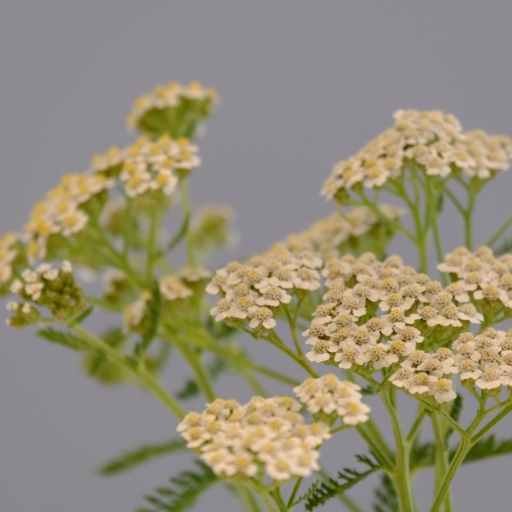
Scientific Name: Achillea millefolium
Native Region: Europe and Asia
Blooming Time: Summer
Flower Colors: Yellow, white, pink, red
Aroma: Slight herbal fragrance
Interesting Facts
- Named after the Greek hero Achilles.
- Traditionally used in herbal remedies.
How to Plant / Growing Tips:
- Plant in full sun: Encourages dense growth and flowering.
- Use poor to average soil: Rich soil can make plants floppy.
- Water sparingly: Yarrow is drought-tolerant.
- Cut back after flowering: Promotes a second bloom cycle.
12. Aconite (Monkshood)
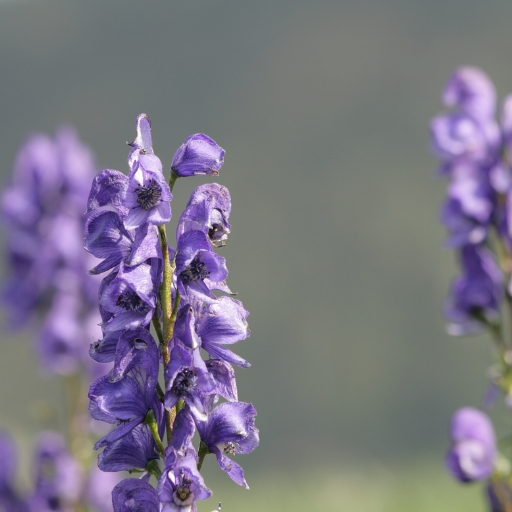
Scientific Name: Aconitum spp.
Native Region: Europe and Asia
Blooming Time: Late summer to fall
Flower Colors: Blue, purple, white
Aroma: Mild scent
Interesting Facts
- The flowers resemble a monk’s hood, giving the plant its name.
- All parts of the plant are toxic if ingested.
How to Plant / Growing Tips:
- Plant in partial shade: Prefers cooler conditions.
- Use rich, moist soil: Keeps roots healthy.
- Water regularly: Do not let soil dry out completely.
- Wear gloves when handling: All parts are toxic.
13. African Daisy
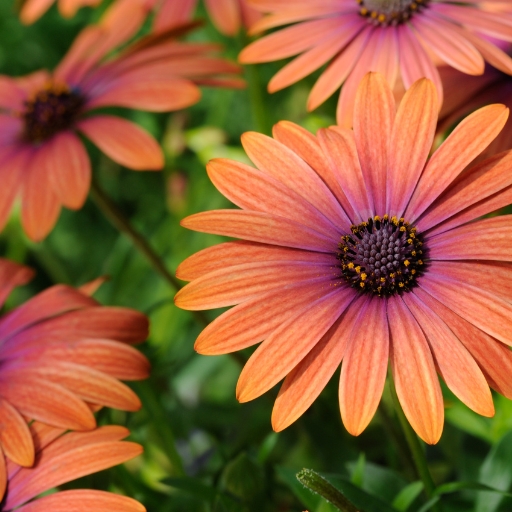
Scientific Name: Osteospermum spp.
Native Region: South Africa
Blooming Time: Spring to fall
Flower Colors: Purple, pink, white, yellow, orange
Aroma: Mild fragrance
Interesting Facts
- The flowers often close at night or during cloudy weather.
- They are popular in container gardens and borders.
How to Plant / Growing Tips
- Plant in full sun.
- Use well-drained soil.
- Deadhead regularly for continuous blooms.
14. Agapanthus (Lily of the Nile)
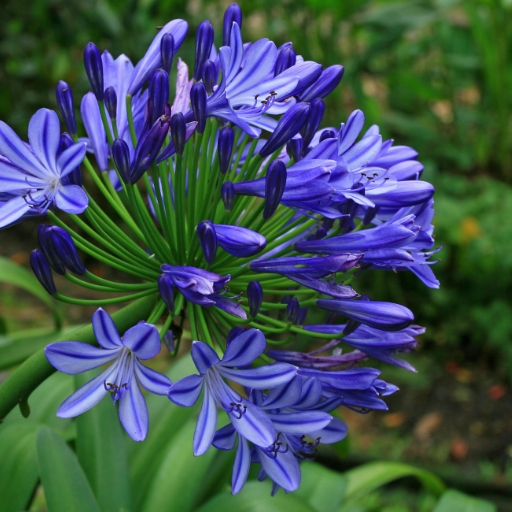
Scientific Name: Agapanthus africanus
Native Region: South Africa
Blooming Time: Summer
Flower Colors: Blue, purple, white
Aroma: Light floral scent
Interesting Facts
- Agapanthus produces large globe-shaped flower clusters.
- It is commonly used in landscape borders and containers.
How to Plant / Growing Tips:
- Plant in sunny or lightly shaded areas: More sun results in better flowering.
- Use well-draining soil: Essential to prevent bulb rot.
- Water during establishment: After that, reduce watering frequency.
- Divide clumps every few years: Encourages continued blooming.
15. Alpine Aster
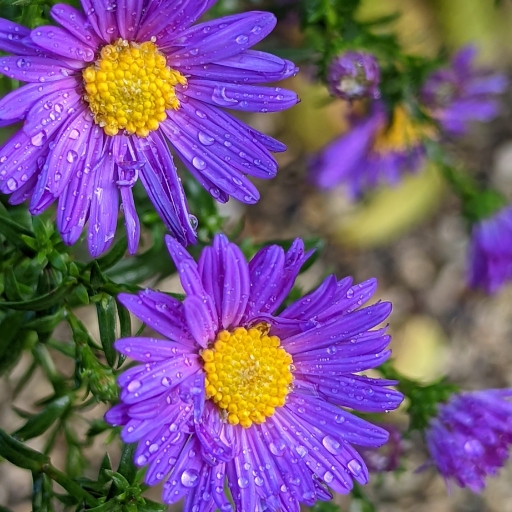
Scientific Name: Aster alpinus
Native Region: Mountain regions of Europe and Asia
Blooming Time: Late spring to early summer
Flower Colors: Purple, pink, blue
Aroma: Very light fragrance
Interesting Facts
- This flower grows well in cool alpine climates.
- It is often used in rock gardens and mountain landscapes.
How to Plant / Growing Tips
- Plant in well-drained soil with full sun.
- Suitable for rocky or gravel gardens.
- Water moderately during dry periods.
16. Asclepias (Milkweed)
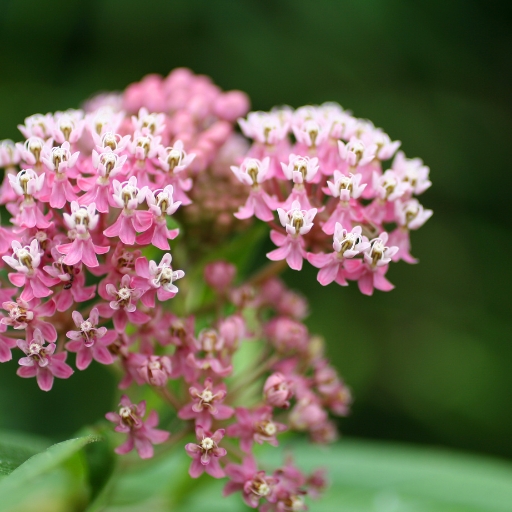
Scientific Name: Asclepias spp.
Native Region: North America
Blooming Time: Summer
Flower Colors: Orange, pink, white
Aroma: Sweet
Interesting Facts:
- Essential for monarch butterflies.
- Produces unique seed pods.
How to Plant / Growing Tips:
- Plant in full sun: Milkweed needs strong light to thrive.
- Use native species: They adapt best to local climates and support pollinators.
- Water during establishment: Mature plants are drought-tolerant.
- Avoid transplanting: Deep roots make relocation difficult.
17. Alstroemeria (Peruvian Lily)
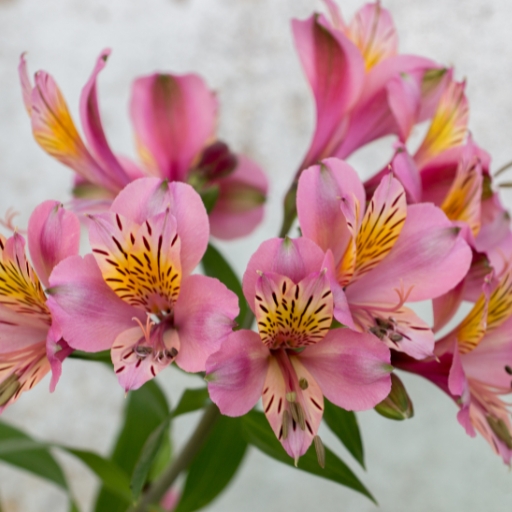
Scientific Name: Alstroemeria spp.
Native Region: South America
Blooming Time: Late spring to summer
Flower Colors: Pink, orange, yellow, white
Aroma: Light
Interesting Facts:
- Long-lasting cut flower.
- Symbolizes friendship.
How to Plant / Growing Tips:
- Plant in full sun: Promotes abundant blooms.
- Ensure good drainage: Prevents tuber rot.
- Mulch in colder climates: Protects roots from frost.
- Remove spent stems: Encourages more flowering.
18. Antirrhinum (Snapdragon)
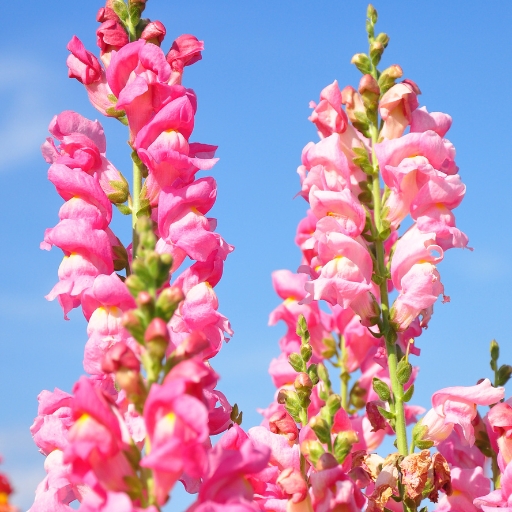
Scientific Name: Antirrhinum majus
Native Region: Mediterranean
Blooming Time: Spring to fall
Flower Colors: Red, yellow, pink, white
Aroma: Light
Interesting Facts:
- Flowers resemble a dragon’s mouth.
- Pollinator-friendly.
How to Plant / Growing Tips:
- Plant in full sun: Ensures strong stems and vibrant blooms.
- Use fertile, well-drained soil: Supports continuous flowering.
- Deadhead regularly: Extends blooming season.
- Water consistently: Avoid letting soil dry out completely.
19. Amsonia (Bluestar)
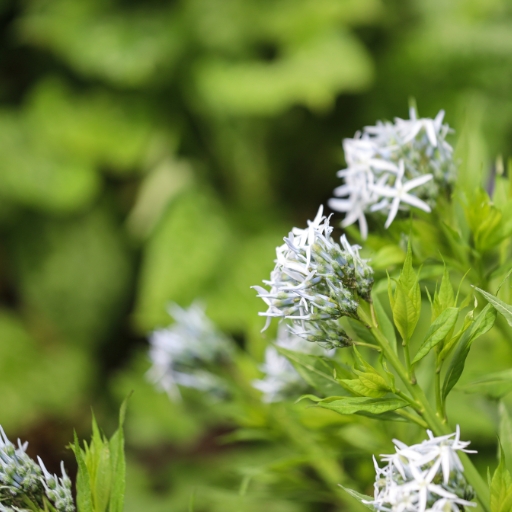
Scientific Name: Amsonia spp.
Native Region: North America
Blooming Time: Spring
Flower Colors: Pale blue
Aroma: Mild
Interesting Facts:
- Turns golden in fall.
- Low-maintenance perennial.
How to Plant / Growing Tips:
- Plant in full sun to partial shade: More sun gives better fall color.
- Use well-drained soil: Prevents root issues.
- Water during early growth: Helps establish strong roots.
- Leave foliage in fall: Adds seasonal interest.
20. Arisaema (Jack-in-the-Pulpit)
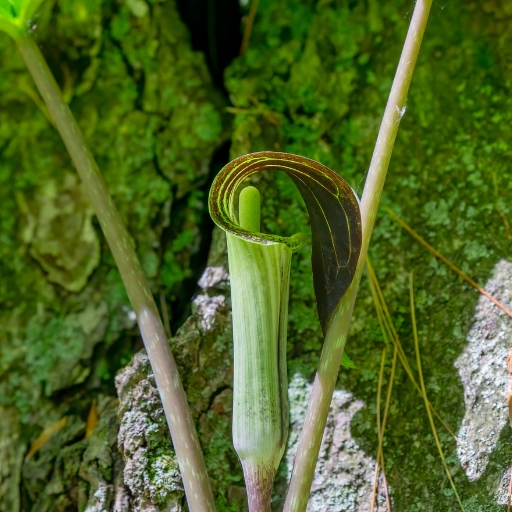
Scientific Name: Arisaema triphyllum
Native Region: North America
Blooming Time: Spring
Flower Colors: Green, purple
Aroma: Mild
Interesting Facts:
- Unique hooded flower structure.
- Common in woodland habitats.
How to Plant / Growing Tips:
- Plant in full shade: Mimics natural forest conditions.
- Use rich, moist soil: High organic matter is ideal.
- Keep soil consistently damp: Avoid drying out.
- Mulch with leaf litter: Helps retain moisture.
Final Thoughts
From classic favorites like Asters and Azaleas to unique picks like Aconitum and Arisaema, flowers that start with “A” offer something for every type of garden.
If you’re just getting started, try Alyssum, Ageratum, or Allium—they’re beginner-friendly and consistently rewarding.